

Mobile Access Protection for Events
Find the right mobile barriers for your needs.
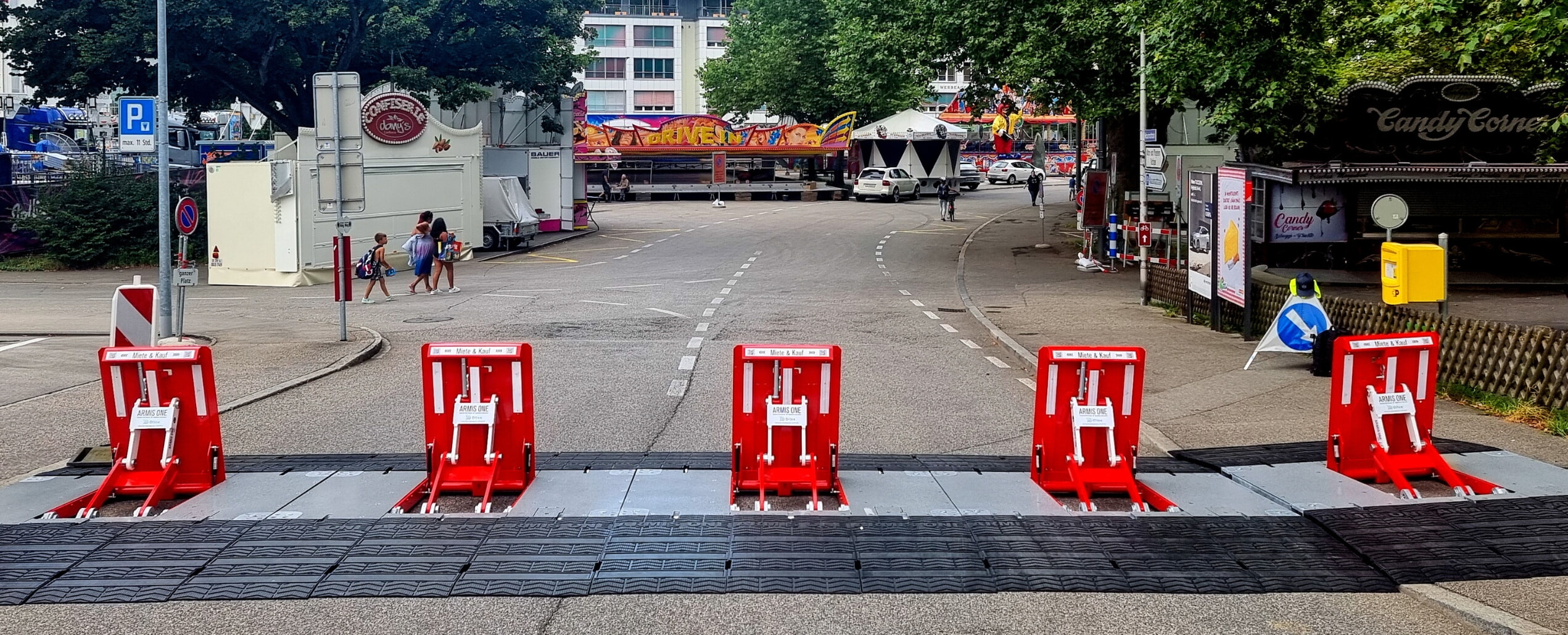
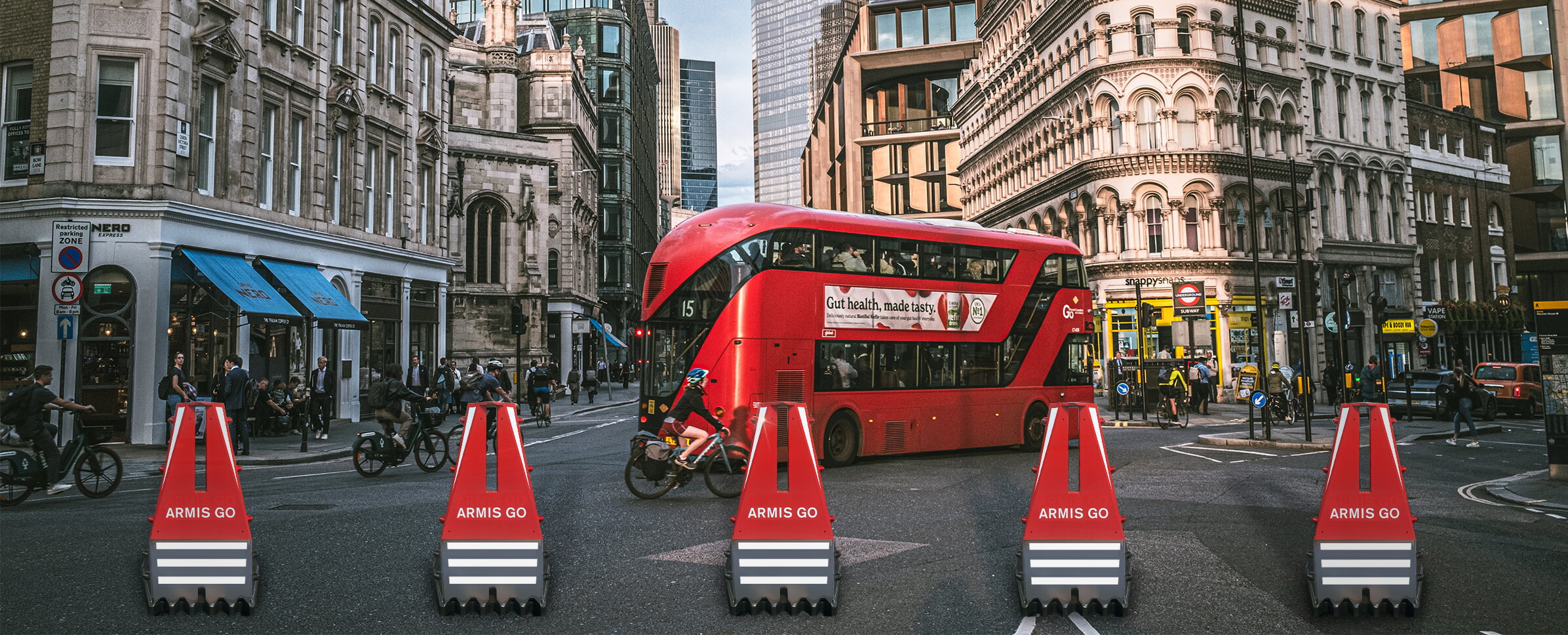
Mobile access protection and Hostile Vehicle Mitigation (HVM) include a wide range of barrier systems. In most cases, one system alone cannot meet every requirement.
Here, you will find out which mobile barriers are suitable for specific situations.
Expert advice
60 minutes of concentrated expert knowledge. We advise you free of charge, competently and independently.

The Challenge of Mobile Access Protection
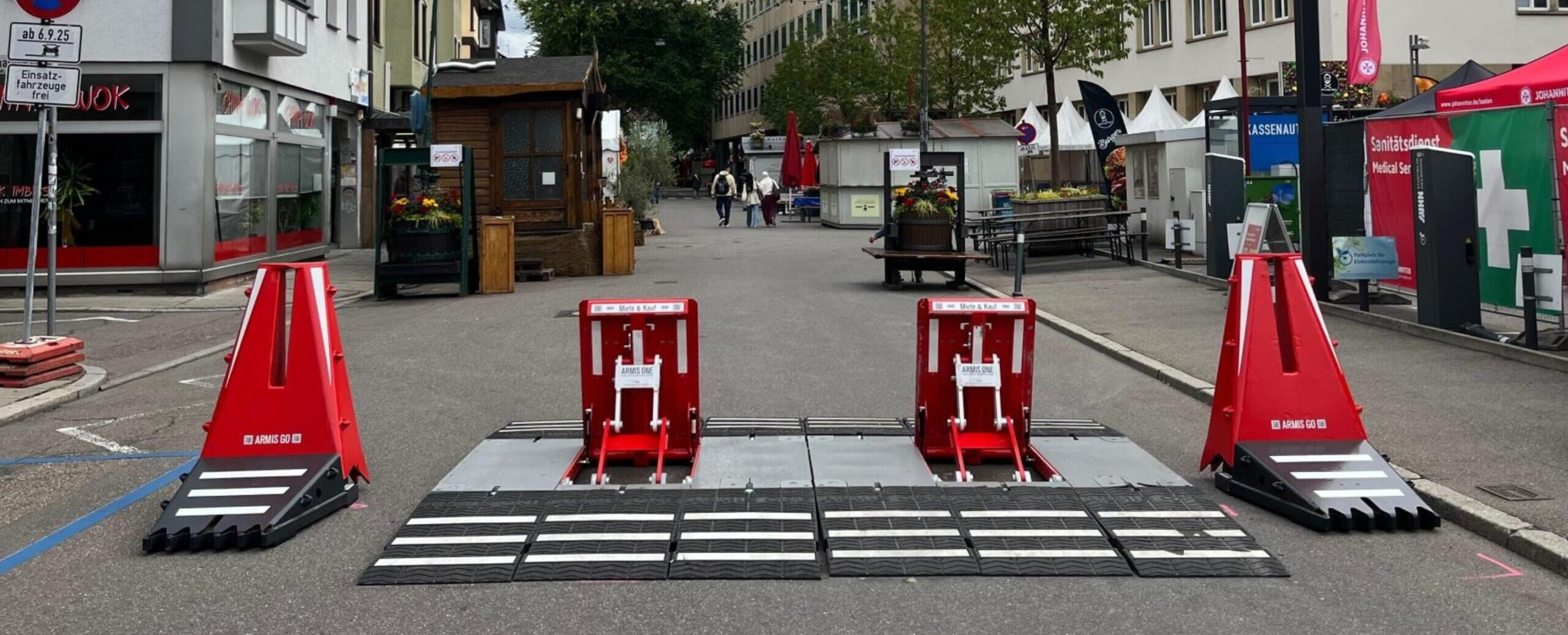
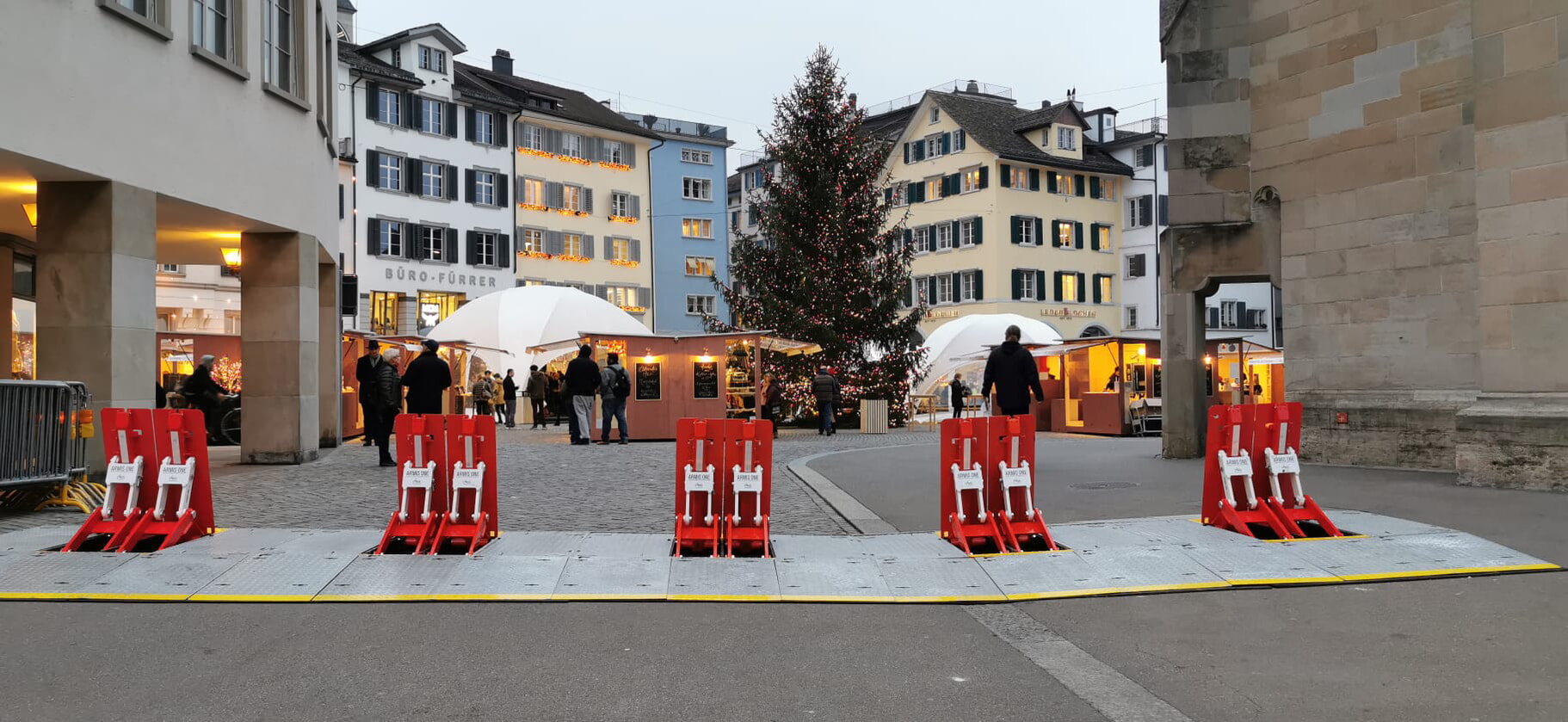
Protecting village fairs, festivals, and Christmas markets presents unique logistical challenges for Hostile Vehicle Mitigation (HVM). Security systems must offer maximum protection while remaining flexible – ideally without requiring permanent groundworks or anchoring. A mobile barrier’s real-world effectiveness is determined by a complex interplay of system design, ground conditions, and local site constraints within a mobile access protection strategy.
Strategic Mobile Access Protection Concepts
A robust security strategy, developed in collaboration with specialized consultants or access protection experts, is essential. These Hostile Vehicle Mitigation (HVM) concepts simplify the assessment of specific requirements and ensure the selection of the most effective mobile access protection for each individual scenario.
Do you have any questions?
Our sales team is at your disposal for a personal, free consultation:


Francis Seijas
CEO Consel Group | Access protection expert / Sales CH / Export
+41 43 277 60 77 francis.seijas@consel.chStrategic Hostile Vehicle Mitigation Concepts
Expert-led HVM strategies for the effective selection of mobile barrier systems.
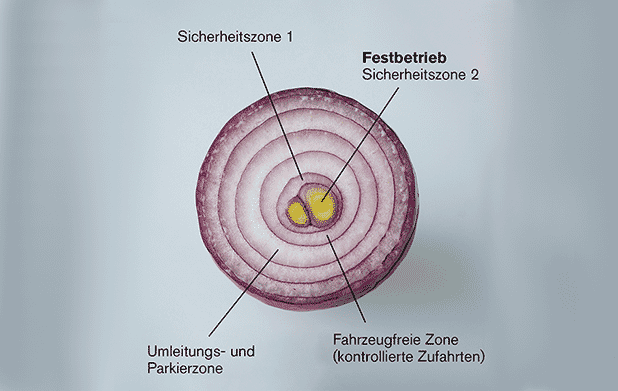
A robust security strategy, developed in collaboration with specialized consultants or access protection experts, is essential. Best practices from major urban centers demonstrate the effectiveness of clearly defined mobile access protection concepts. City centers and high-profile event sites are typically secured using a layered “onion principle”, dividing the area into distinct Hostile Vehicle Mitigation zones.
The selection of mobile barrier systems depends entirely on the specific requirements of each zone. As the perimeter moves closer to the operational heart of the event, the criteria become increasingly stringent. In these inner zones, it is essential to deploy mobile access protection that simultaneously satisfies three critical requirements:
-
Unobstructed pedestrian flow to prevent congestion and ensure safety
-
Minimal penetration depth to ensure maximum safety in tight spaces (HVM-certified)
-
Controlled accessibility for emergency services and authorized delivery vehicles
The Necessity of a Modular System Mix
Why a single mobile barrier can never satisfy every HVM requirement.
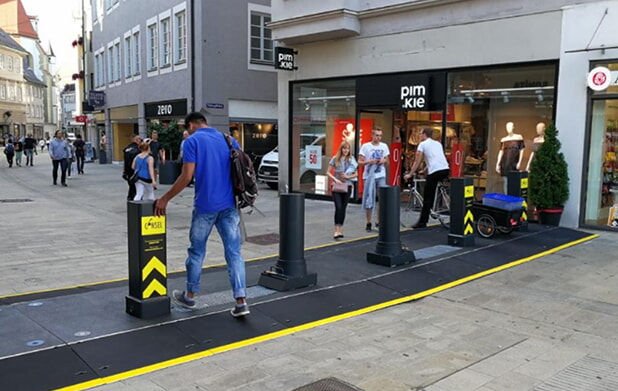
Is there a single barrier that satisfies every requirement? From a professional standpoint: no. Every system used in Hostile Vehicle Mitigation is engineered for specific operational scenarios. Their suitability for mobile access protection is determined by a complex set of variables:
-
Impact Load Capacity: The kinetic energy the HVM system can effectively absorb
-
Dynamic Penetration Depth: The distance a vehicle travels post–impact before the barrier stops it
-
Permeability: Maintaining pedestrian flow and general accessibility within the protection zone
-
Operational Flexibility: The ability to relocate systems or provide controlled passage
-
Handling & Logistics: Requirements for transport, storage, and rapid deployment of elements
-
Mode of Operation: Ranging from purely manual to fully automated systems
This is why major cities – such as Berlin, Munich, and Zurich – do not rely on a single product. Instead, they implement a strategic combination of diverse mobile barrier systems to create a comprehensive and resilient Hostile Vehicle Mitigation infrastructure.
Safety Zone Before Protection Zone
Why every HVM system requires a calculated safety zone to be effective.
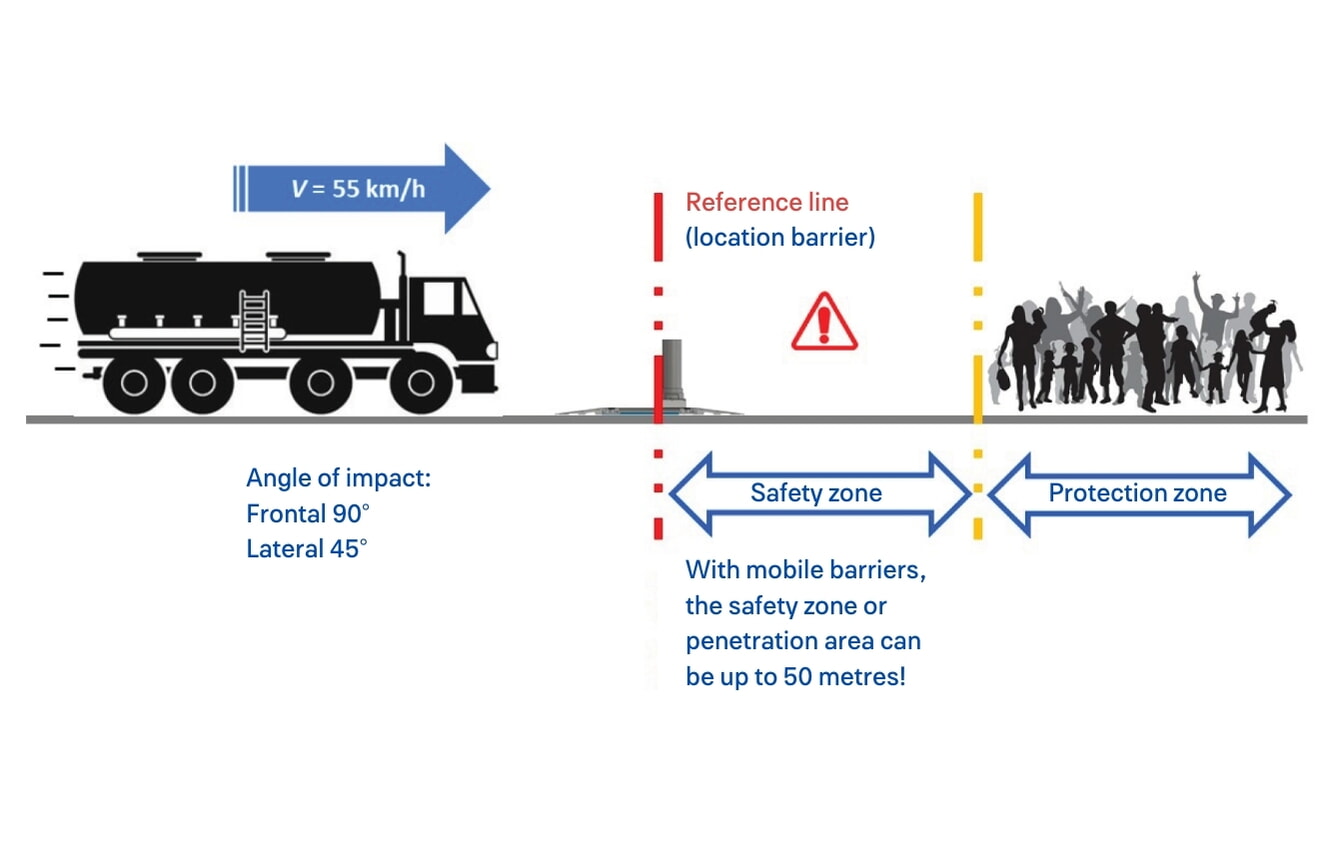
It is a physical certainty that every mobile barrier will shift between 6 and 50 metres upon impact – depending on its specific tested penetration depth.
Compared to previous testing standards – such as IWA 14-1 and PAS 68 – the new ISO 22343-1 restricts the maximum penetration depth to 25 metres. Consequently, it is mandatory to plan a dedicated safety zone.
If the barrier is positioned too close to the festivities (the protection zone), the force of an impact will propel the system directly into the crowd – rendering the protection ineffective.
Alternative mobile access protection systems under scrutiny
When assessing security measures, it is vital to distinguish between a perceived sense of security and technically proven protection. Many common methods used today often fail to meet modern safety requirements when put to the test.

Chicanes and Offset Elements
The risks of unlinked concrete blocks in mobile access protection strategies.
Show more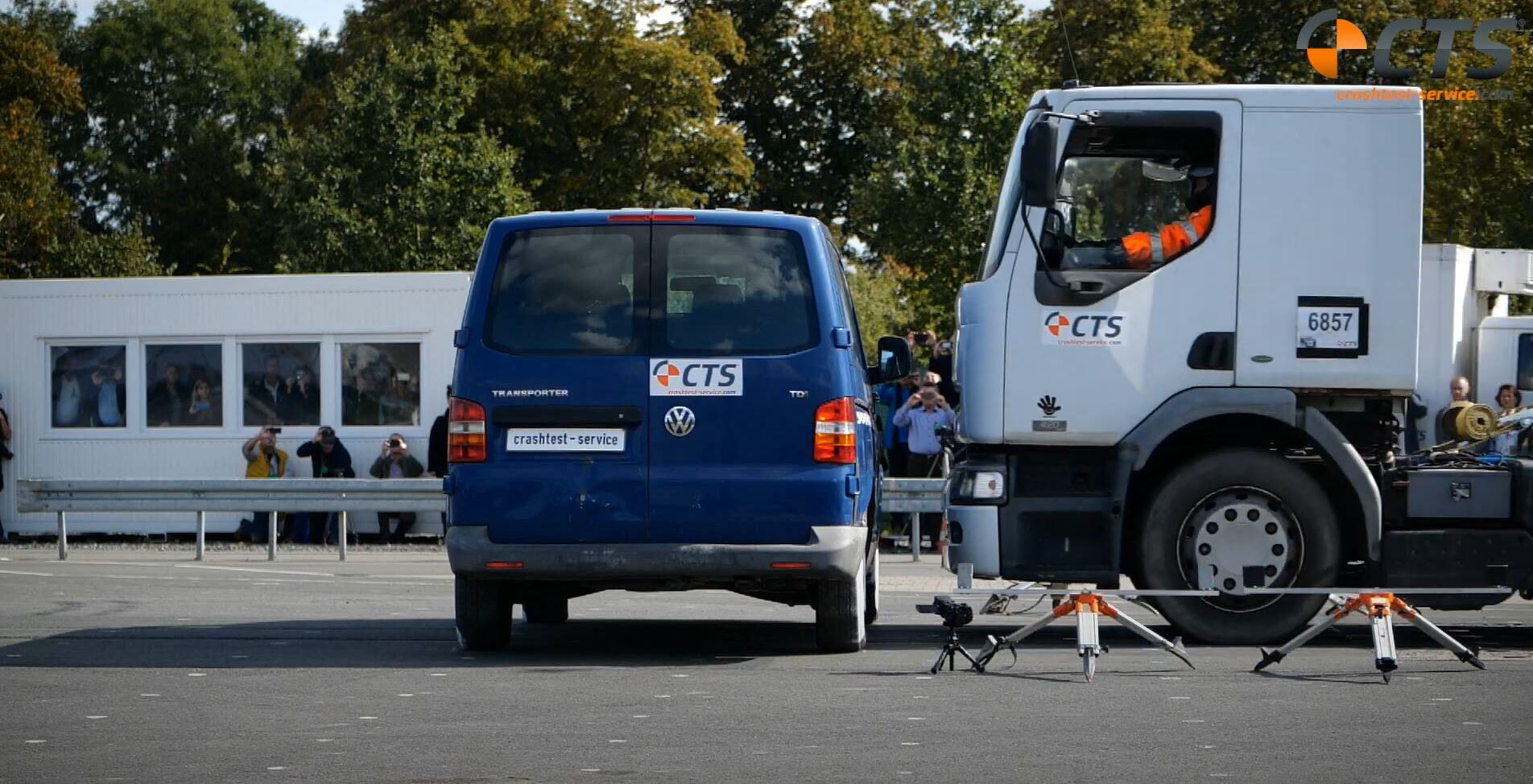
Transversely Positioned Vehicles
Why lorries often fail as reliable Hostile Vehicle Mitigation in real-world scenarios.
Show more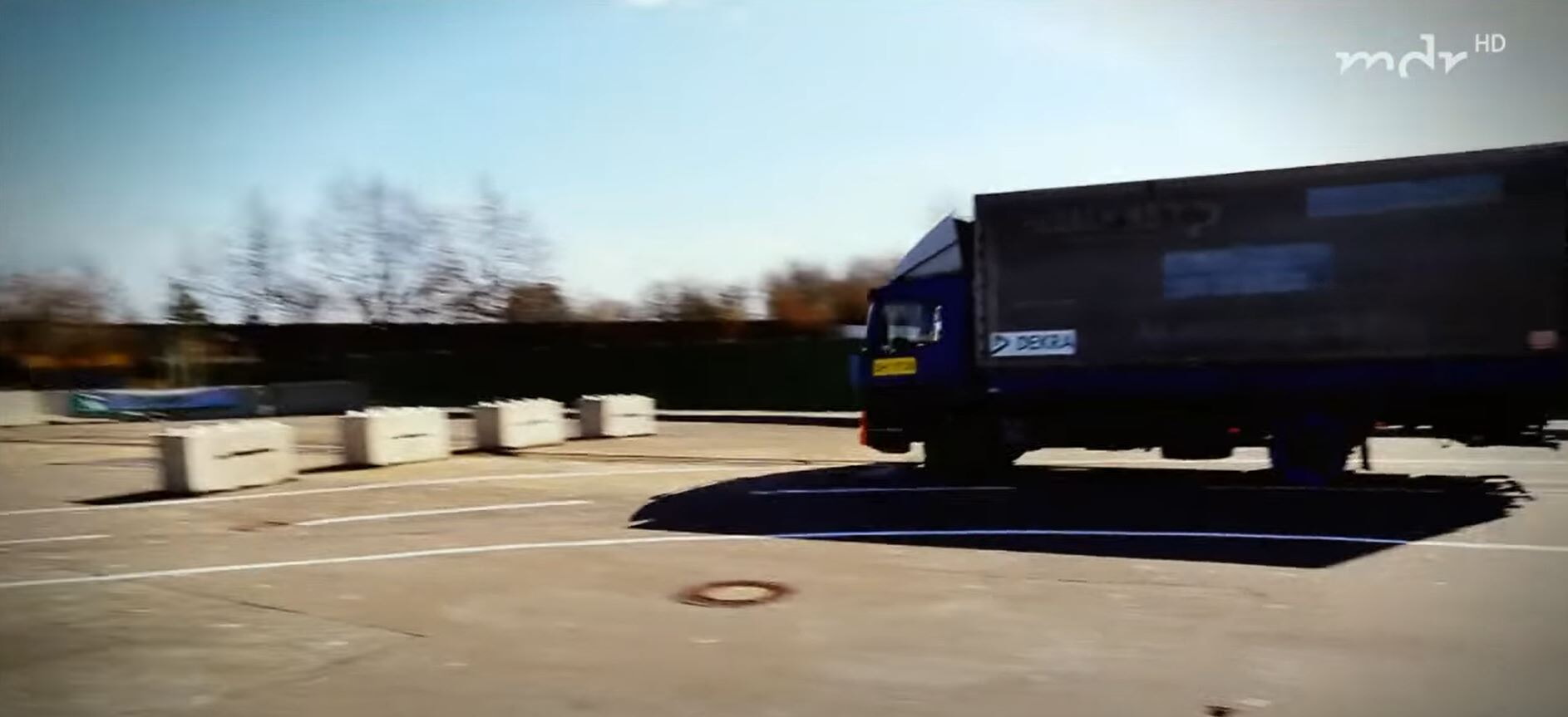
Loose Concrete Blocks and Jersey Barriers
The risks of unlinked concrete blocks in mobile access protection strategies.
Show more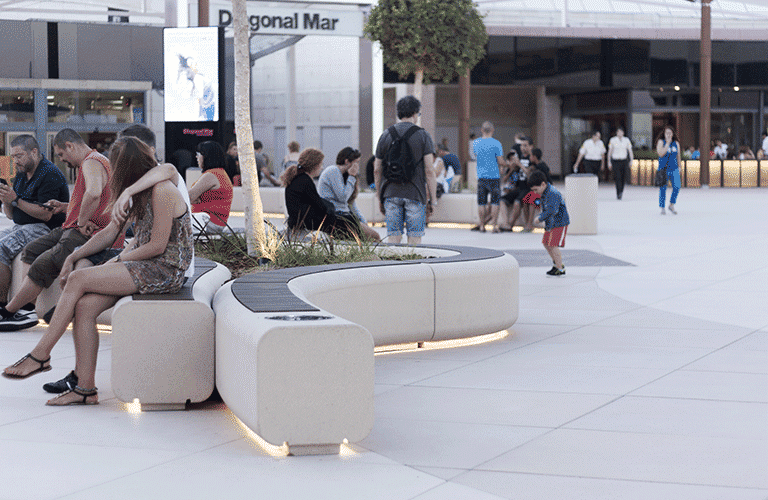
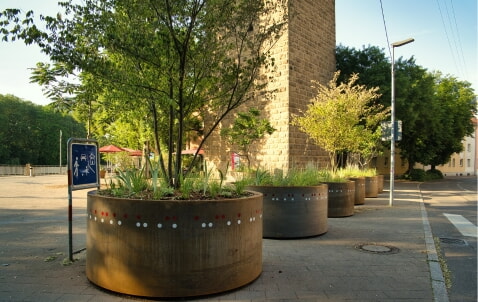
Protective Street Furniture – The Hidden Access Protection
Combining urban design with certified safety.
Show moreProducts
Mobile Access Protection (HVM) – Our Certified Barrier Systems
When it comes to effective mobile access protection, there is no room for compromise – our range of certified mobile and stationary systems combines rapid deployment with the highest international safety standards.
Do you have any questions?
Our sales team is at your disposal for a personal, free consultation.
Francis Seijas
CEO Consel Group | Access protection expert /
Sales CH / Export
